

Sakshi Mathuria
A Scratch on the Earth
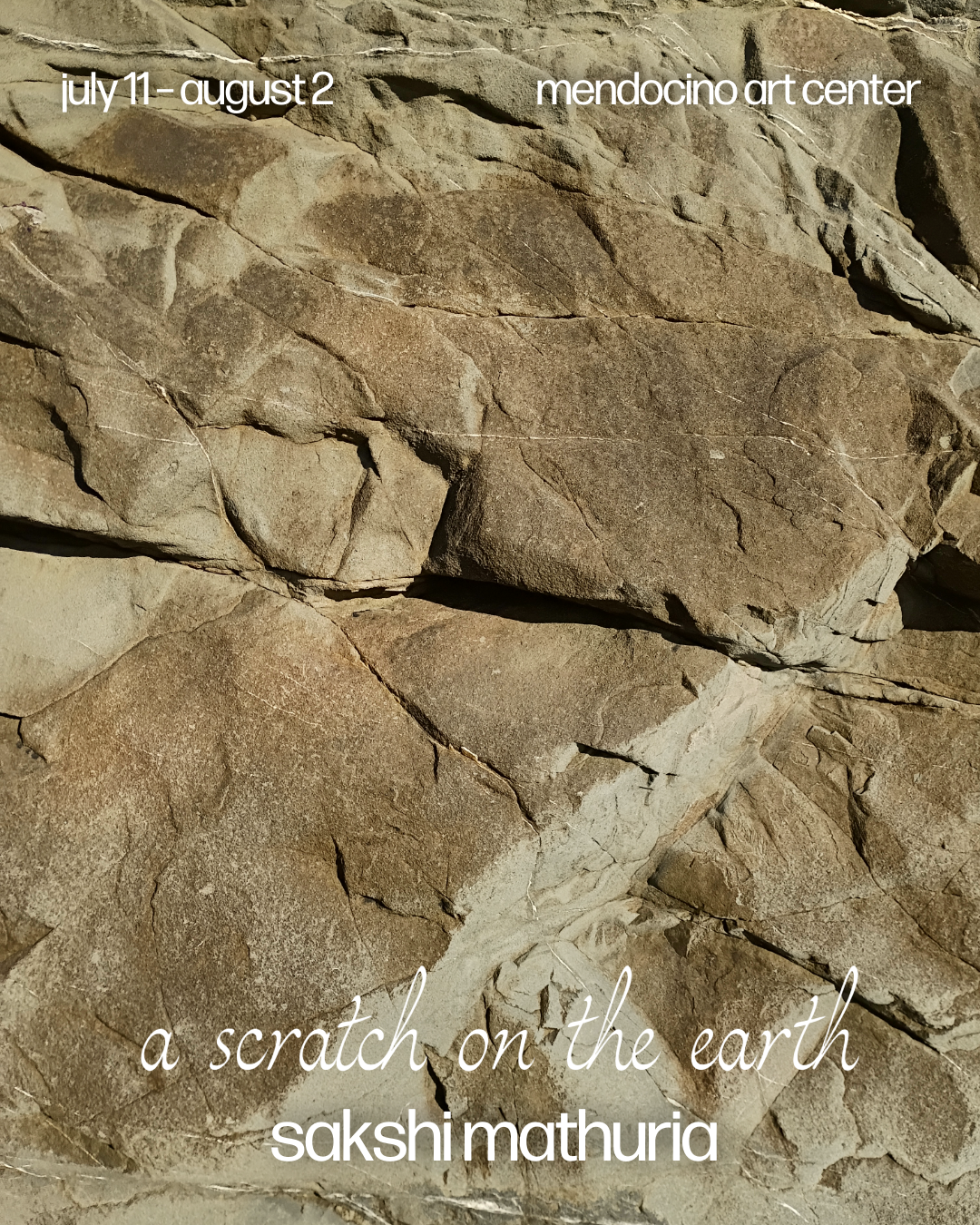
A scratch on the earth
Pots, fire, and free-verse poetry form the core of A scratch on the earth. The poems were written alongside the clay works. They capture a stream-of-consciousness recording of time spent in the studio at the Mendocino Art Center. These texts hold raw musings on the environment and clay. In doing so, they invoke a somatic memory—a faint, intuitive recall of a past not of this life. Together, the pottery, the verse, and the flame move as one.
The heart of the exhibition is a vital, intentional exploration of environmental circularity. A deep engagement with materials and firing is inherent to this tradition, which is accompanied by the support of the community. Foraged seaweed, pine resin, driftwood, and calla lilies are central to the mark-making and surface decoration. Through pit firing, the surrounding biome becomes a physical archive on the clay, displaying the dynamic imprints left by the fire.
This work actively extends ancient pit-firing traditions into the present. Grounded in my Indian heritage and research of global firing techniques, I wish for people to see the pots as more than just relics of the past. The work holds a direct material relationship with each land and its ecology. Ultimately, the works are as much to mine as they are of this living landscape.
Bio :
Sakshi Mathuria is an Indian ceramic artist rooted in the Western Ghats of Pune, where she runs Studio MetaMaati, and is currently based in Mendocino, California, having recently completed her long-term ceramic residency at the Mendocino Art Center. Working at the intersection of ecology and spirituality, her practice serves as a deep inquiry into personal and communal rituals—particularly those carried by women—that sustain an embodied connection to nature, the landscape, and the land.
Mathuria’s practice has been shaped by a formative mentorship under Neha Kudchadkar, alongside residencies at the Rochester Folk Art Guild in New York and the Watershed Center for the Ceramic Arts in Maine. She has been further recognized and supported by the NCECA Multicultural Fellowship. Alongside these vital intersections, her artistic path remains an intentionally self-designed journey of discovery.